3D visualisation built for the brand.
Photography has limits. It needs physical product, controlled conditions, and significant budget to do well at scale. 3D visualisation removes those constraints — producing photorealistic imagery and animation from a model rather than a set. It's a more precise, more flexible, and often more cost-effective way to show a product exactly as it should be seen.
Stills
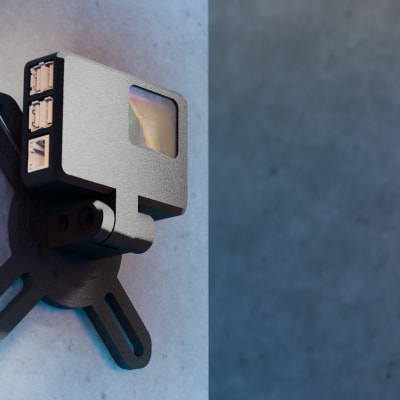
3D Product Renders
We produce photorealistic product renders from 3D models — at any angle, in any light, against any background. No physical sample required. Ideal for pre-launch marketing, ecommerce imagery, print advertising, and any situation where photography would be slower, more expensive, or more limiting. Every render is produced against the brand identity — colour, lighting, and composition treated as brand decisions rather than technical defaults.
Stills
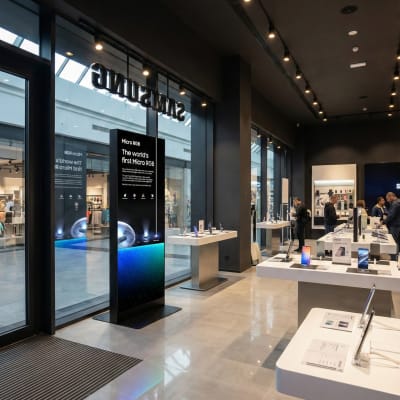
Lifestyle and Scene Renders
Products don't exist in isolation — they exist in rooms, on surfaces, in the hands of the people who use them. Lifestyle and scene renders place your product in a believable environment without a photographer, a location, or a styled shoot. The result is content that communicates the brand world around the product as clearly as the product itself.
Why 3D visualisation has replaced photography for a lot of visual content
Photography is the right tool for a lot of things. It's not always the right tool for product imagery. A photoshoot requires finished product, physical logistics, a controlled studio environment, and a budget that scales with complexity. Change a colour variant, update the packaging, or want a different angle — and you're booking another shoot.
3D product renders remove those dependencies. The model exists once. Every angle, every variant, every context comes from the same asset without reshooting. For brands with complex product ranges, frequent updates, or a need to produce content before the physical product is ready, it's a fundamentally more efficient approach.
Where 3D fits within a brand system
The mistake most businesses make with 3D visualisation is treating it as a production tool rather than a brand one. The quality of a render is obvious. So is the absence of a brand sensibility behind it. Lighting that doesn't reflect the brand aesthetic, compositions that don't match the visual identity, colour grading that contradicts the palette — these are the details that make 3D content feel generic rather than considered.
We approach 3D work the same way we approach brand identity design. The brief starts with what the brand needs to communicate and to whom. Every visual decision — environment, lighting, angle, finish — is made against that brief. The result is 3D content that builds brand image rather than just filling a content slot.
The commercial case for 3D in ecommerce
The gap between what a customer expects when buying online and what they receive is one of the primary drivers of returns. 360° product views, high-resolution renders from multiple angles, and lifestyle imagery that shows the product in context all reduce that gap — giving customers a more accurate picture of what they're buying before they buy it.
For ecommerce brands, the investment in a 3D digital product catalogue pays for itself in reduced return rates and increased conversion. The imagery is more consistent than photography, more flexible when products change, and produces stronger brand recognition across the range because everything is lit and finished to the same standard.
CAD to render: one model, two uses
Most businesses treat product engineering and marketing as separate workflows. The CAD model gets built for manufacturing and never touches the marketing team. We use the same model for both — taking CAD geometry and rendering it to photorealistic quality without rebuilding the asset from scratch.
For product brands at development stage, this means marketing assets can be produced before a physical product exists. For established brands, it means the engineering accuracy of the CAD model produces renders that are dimensionally correct — which matters when the product is technical, precise, or where brand trust depends on accuracy.
/// - Get your free consultation
Need product visuals that hold up everywhere they appear? Let's talk.
Frequently Asked Questions
3D product visualisation is the process of producing photorealistic imagery of a product from a 3D model rather than through photography. It allows brands to show their product at any angle, in any environment, and in any variant — without needing a physical sample, a studio, or a photoshoot.
It depends on the deliverable. For product renders, we typically work from CAD files, existing photography used as reference, or physical product where applicable. For brand animation, we need the brand identity files and any motion direction. We'll specify exactly what's needed during briefing.
A digital product catalogue is a library of 3D rendered product imagery produced to a consistent standard — same lighting, same angles, same finish — across an entire product range. It replaces photography as the source of ecommerce and marketing imagery and can be updated or extended when products change without a new shoot.
Any format the project requires. Still renders are typically delivered as high-resolution TIFFs or PNGs for print and web use. Animations are delivered as MP4 or MOV files at the resolution and frame rate specified. We'll agree file specifications during briefing so deliverables are ready to use without additional conversion.
Yes. Brand animation typically starts from the existing identity files. We build the motion language around what already exists rather than redesigning the identity for motion — keeping the animation consistent with the brand system rather than creating a separate visual register.
Yes. Architectural and spatial visualisation serves property developers and interior designers. Brand animation and motion content apply across all sectors. CAD and product render work is most relevant to product-led businesses, but the broader 3D and animation capability is sector-agnostic.
Indistinguishable from photography when done well. Modern rendering technology combined with precise lighting and material simulation produces results that the vast majority of viewers cannot identify as CGI. The quality depends on the accuracy of the model, the standard of the lighting setup, and the level of post-production applied.
For many brands, yes — particularly those with large product ranges, frequent variant changes, or products that are still in development. For others, photography remains the right tool for certain applications. The honest answer is that it depends on the product, the use case, and the volume of content required. We'll tell you which approach makes most sense.
CAD models are built to engineering tolerances — they contain precise geometry that can be used directly as the basis for photorealistic rendering. When we produce the CAD model, the same asset serves both the manufacturing brief and the marketing brief, eliminating the need to rebuild the product in a separate piece of 3D software. It's a more efficient workflow and produces dimensionally accurate renders.
A single product render can be turned around in a few days once the model is built. A full digital product catalogue or animation project takes longer — typically three to six weeks depending on complexity and volume. We scope timelines precisely before starting.
Brand animation is the motion expression of the visual identity — logo reveals, animated brand elements, motion graphics that carry the brand language. Explainer animation is communication-led — it uses motion to explain how a product works, demonstrate a process, or make a complex idea legible. The two can overlap, but they serve different briefs.
Other Services
Explore our other service offerings
Want to see your brand perform?
Let’s talk about how we can take your brand to the next level. Contact us for a free consultation, and we’ll start building a strategy that drives real results.